
FT Top 10: Leaders Adding Value to the Fintech Ecosystem of the Turkic World 2026
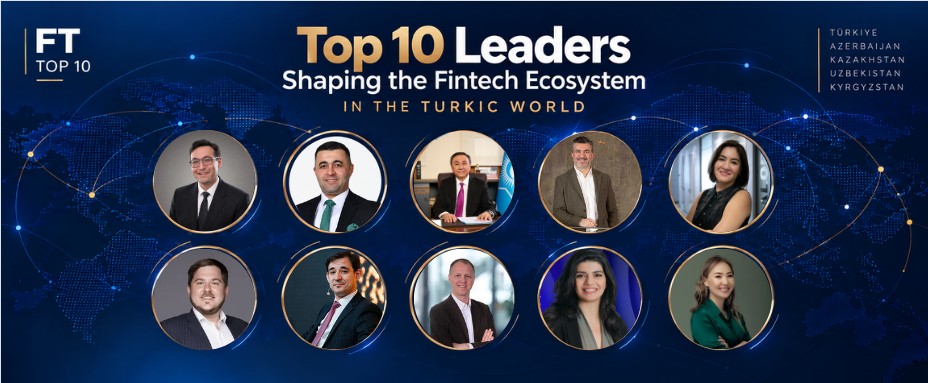
FT Finansal Teknoloji brings together, in alphabetical order, 10 leaders who have made tangible contributions to fintech, payment systems, investment, regulation and ecosystem collaboration across Türkiye, Azerbaijan, Kazakhstan, Uzbekistan and Kyrgyzstan.
Read the Turkish version → [Türkçe versiyonu oku]
The fintech ecosystem across the Turkic world is increasingly developing through cross-border connections. The interoperability of payment systems, the opening of national QR infrastructures to one another, digital identity solutions, investment networks, collaboration among fintech associations and joint mechanisms established at the level of central banks are becoming key pillars of regional integration.
This transformation is being shaped not only by companies expanding into new markets, but also by leaders who connect ecosystems, create shared areas of cooperation and contribute to building lasting relationships between the financial and technological structures of different countries.
This FT Top 10 selection focuses on individuals contributing to the development of the fintech ecosystem across Türkiye, Azerbaijan, Kazakhstan, Uzbekistan and Kyrgyzstan through cross-border collaboration, payment and financial infrastructure, investment and innovation networks, institutional structures and knowledge sharing.
The leaders included in the selection do not all play the same type of role. Some contribute to the development of payment infrastructure, others to collaboration between ecosystems, investment and entrepreneurship networks, or regional mechanisms established among public and regulatory institutions. This diversity also reflects the increasingly multi-layered and interconnected structure of the fintech ecosystem across the Turkic world.
Binur Zhalenov
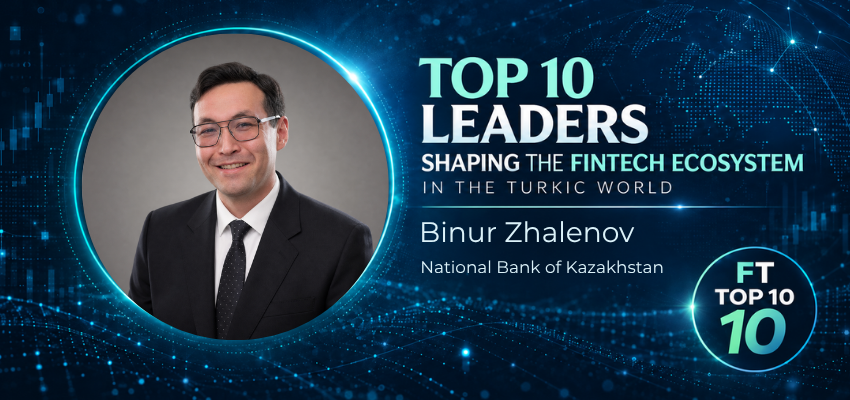
Deputy Governor of the National Bank of Kazakhstan
Kazakhstan’s fintech transformation in recent years has been driven not only by new products, but by a comprehensive financial architecture extending from payments and digital identity to open banking and digital currency infrastructure. Binur Zhalenov has been one of the key figures involved in shaping this transformation.
From his leadership role at the National Payment Corporation to the National Bank of Kazakhstan’s digital transformation initiatives and his appointment as Deputy Governor in 2026, Zhalenov has played an active role in the development of the Digital Tenge, Open APIs, antifraud systems and national payment infrastructure.
This experience was later carried into the cooperation agenda among Turkic states. In multilateral initiatives involving the central banks of Türkiye, Azerbaijan, Kazakhstan, Kyrgyzstan and Uzbekistan, experiences in common KYC, instant payment systems, QR, CBDCs and open banking were compared, while the establishment of permanent cooperation mechanisms in fintech and payment systems was placed on the agenda.
Zhalenov’s contribution to the fintech ecosystem of the Turkic world stands out in his role in bringing nationally developed digital financial infrastructure into the broader discussion of regional interoperability and shared payment systems.
Edgar Abdullayev
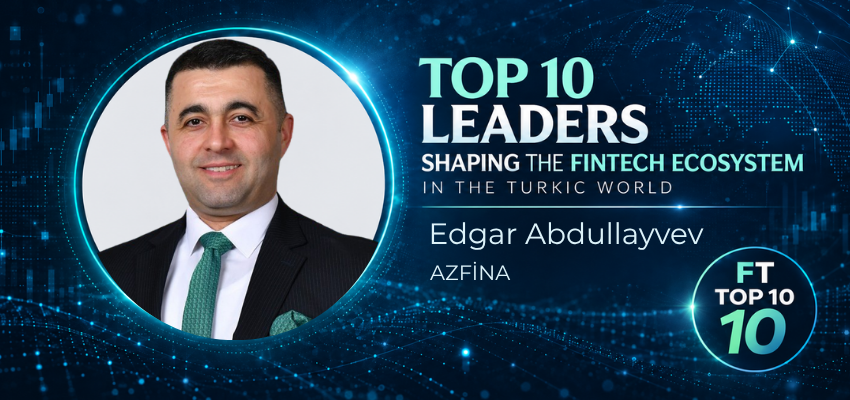
Chairman of the Board, Azerbaijan Fintech Association – AzFina
The key challenge facing fintech integration across the Turkic world is not technology alone, but the ability of different payment systems, regulatory frameworks and financial identity infrastructures to communicate with one another.
Edgar Abdullayev, Chairman of the Azerbaijan Fintech Association, has been among the figures bringing this issue to the centre of the regional agenda in recent years. He has focused on accelerating cross-border payments, interconnecting payment systems, developing common KYC and AML approaches, improving regulatory alignment and establishing shared sandbox mechanisms across Türkiye, Azerbaijan, Uzbekistan, Kazakhstan and Kyrgyzstan.
Sharing Azerbaijan’s experience in open banking, its instant payment system and national QR infrastructure with other Turkic states has also been among the areas highlighted by Abdullayev.
His approach is based on the long-term objective of building a more integrated fintech and payment corridor that could increasingly bring financial transactions between Turkic states closer to the experience of domestic payments.
Abdullayev’s contribution lies in moving fintech cooperation among Turkic states beyond a general narrative of solidarity and defining it around tangible infrastructure and integration priorities that can be developed in practice.
Kubanychbek Omuraliev
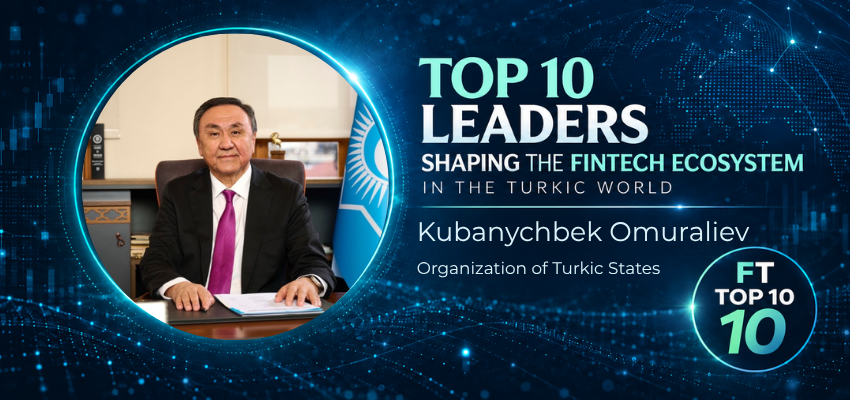
Secretary General of the Organization of Turkic States
The cross-border growth of fintech ecosystems depends not only on agreements between companies. Establishing permanent mechanisms through which central banks, regulators and public institutions can work together is also one of the fundamental elements of regional financial integration.
The recent work of Ambassador Kubanychbek Omuraliev, Secretary General of the Organization of Turkic States, intersects directly with efforts to strengthen this institutional foundation.
With the establishment of the OTS Council of Central Banks, bringing together the central banks of Türkiye, Azerbaijan, Kazakhstan, Kyrgyzstan and Uzbekistan under a common structure, issues such as fintech, payment systems and central bank digital currencies were placed on a regular intergovernmental cooperation agenda. The creation of working groups focused on payment systems and digital financial ecosystems also became part of this framework.
During the same period, cooperation among financial intelligence units was transformed into a permanent platform, adding another layer to the regional architecture in areas including digital assets, combating financial crime and safeguarding the security of financial systems.
Omuraliev’s contribution to the fintech ecosystem of the Turkic world is reflected in his support for the continuity of inter-institutional and intergovernmental cooperation mechanisms required for the development of financial technologies.
Murat Kastan
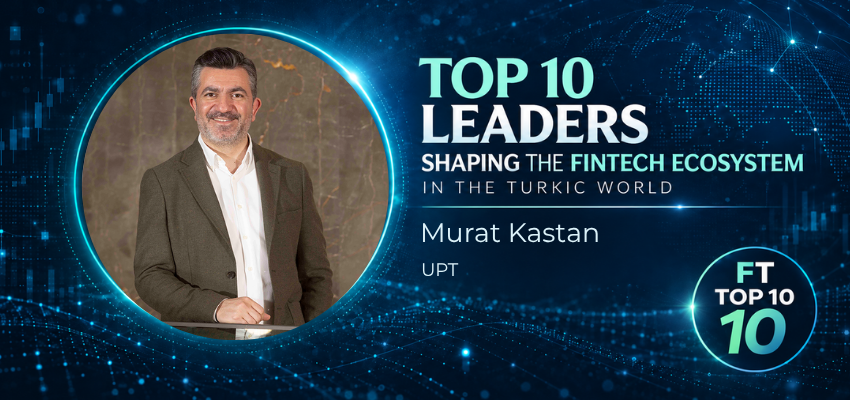
CEO UPT
One of the clearest indicators of regional fintech integration is when a financial service developed in one country becomes genuinely usable across borders.
The recent work of UPT CEO Murat Kastan has focused directly on this area. As UPT’s money transfer services expanded across digital channels connecting Türkiye with Kazakhstan, Uzbekistan and Azerbaijan, partnerships with banks and financial institutions in different countries helped make cross-border money transfers more accessible.
In Azerbaijan, integration with ABB made it possible for international money transfers to be received directly through mobile banking channels, while new partnerships were developed with local financial institutions in Uzbekistan.
Kastan has also played an active role in efforts to strengthen payment corridors among Turkic states, increase the interoperability of financial systems and expand regional money transfer infrastructure.
His contribution is most visible in the way fintech cooperation across the Turkic world is translated into real money flows, digital distribution channels and cross-border payment infrastructure.
Nargis Dustmatova
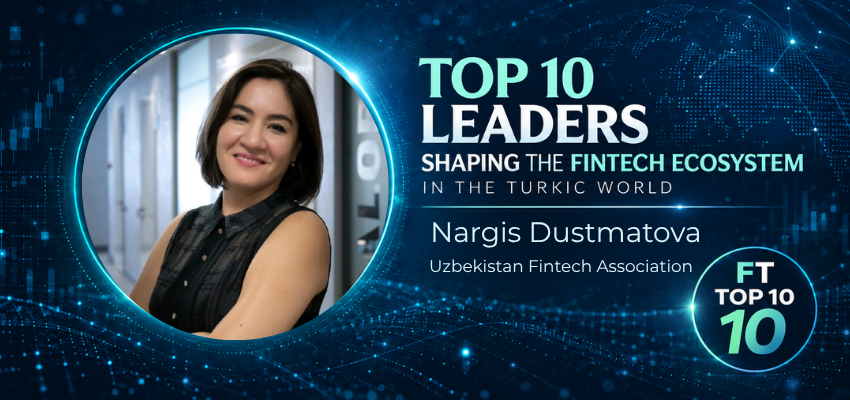
Chairwoman of the Fintech Association of Uzbekistan
The development of a fintech ecosystem is not measured solely by the number of companies it contains. The ability to bring regulators, startups, investors and international partners around the same table is also an important measure of ecosystem capacity.
The recent work of Nargis Dustmatova, Chairwoman of the Fintech Association of Uzbekistan, has focused on building these connections.
Dustmatova has played an active role in regional initiatives bringing together fintech stakeholders from Türkiye, Azerbaijan, Uzbekistan and other countries in the region around issues including cross-border payments, interoperable financial infrastructure, regulatory cooperation, investment and digital trust.
Strengthening the connection between Uzbekistan’s fintech ecosystem and Central Asia, Europe and wider international networks, as well as running capacity-building programmes aimed at increasing the participation of women and young people in fintech, are also important elements of her work.
Dustmatova’s contribution to the fintech ecosystem of the Turkic world stands out in her efforts to position Uzbekistan not only as a growing fintech market, but also as a hub where regional partnerships can be formed and different ecosystems can connect.
Pavel Koktyshev
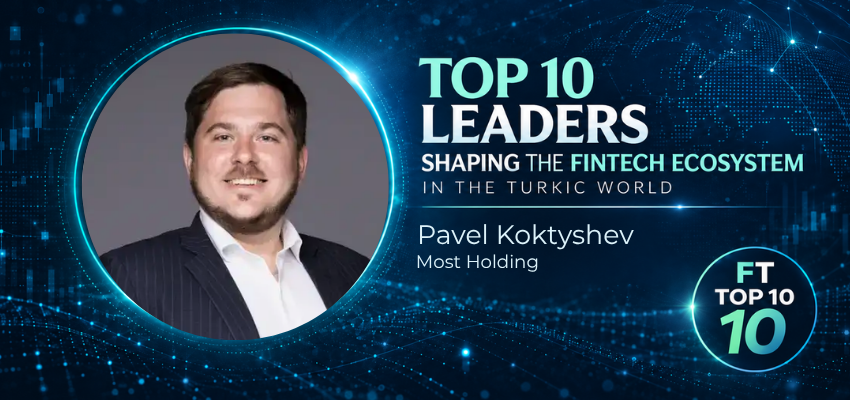
CEO of MOST Holding
The growth of fintech and technology ecosystems across the Turkic world depends not only on the emergence of new startups, but also on their ability to access capital, customers and new markets across borders.
Pavel Koktyshev, CEO of MOST Holding, has emerged as one of the figures connecting Kazakhstan’s investment and entrepreneurship ecosystem with Uzbekistan and the wider Central Asian region.
Through venture capital funds, accelerator programmes, technology centres and digital finance investments developed within MOST, the ecosystem has expanded beyond Kazakhstan and begun building more permanent links with startups and investors in Uzbekistan. In 2026, regional investment initiatives brought entrepreneurs, investors and institutions from Kazakhstan and Uzbekistan onto the same platform, helping generate new partnerships and investment agreements between the two ecosystems.
MOST’s accelerator programmes launched with local institutions in Uzbekistan, together with its investment networks across Kazakhstan, Uzbekistan and Kyrgyzstan, represent a continuation of this approach.
Koktyshev’s contribution to the fintech ecosystem of the Turkic world is reflected in efforts to build a regional capital and entrepreneurship network through which technology and fintech startups can grow beyond national borders.
Rasim Khammadov
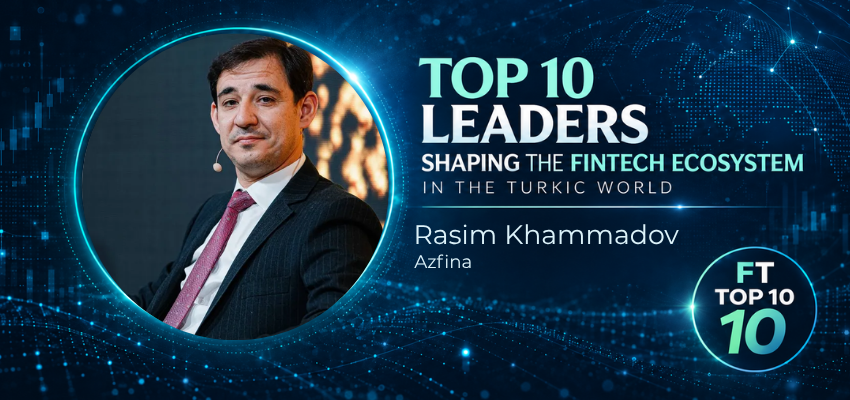
Board Member, Azerbaijan Fintech Association – AzFina / TÜRKFİN
Closer fintech integration among Turkic states requires more than a greater number of company partnerships. It also depends on payment systems and financial infrastructures in different countries being able to operate through common standards.
Rasim Khammadov has been among the figures bringing the technical and operational side of this integration to the regional agenda.
Through his work within AzFina and TÜRKFİN, he has focused on developing common KYC and compliance approaches across Türkiye, Azerbaijan, Uzbekistan, Kazakhstan and Kyrgyzstan, strengthening account-to-account payment infrastructure, enabling national QR systems to become interoperable and developing common data and registry mechanisms that can increase the visibility of fintech companies across the region.
In Khammadov’s approach, regional integration is not limited to meetings and declarations of cooperation. Shared infrastructure, standardised data, interoperable payment systems and mechanisms enabling companies to operate more easily across other Turkic states are among the core priorities.
Khammadov’s contribution to the fintech ecosystem of the Turkic world is most visible in efforts to translate regional cooperation into actionable technical areas such as common KYC, A2A payments, QR interoperability and shared fintech infrastructure.
Serhat Şener
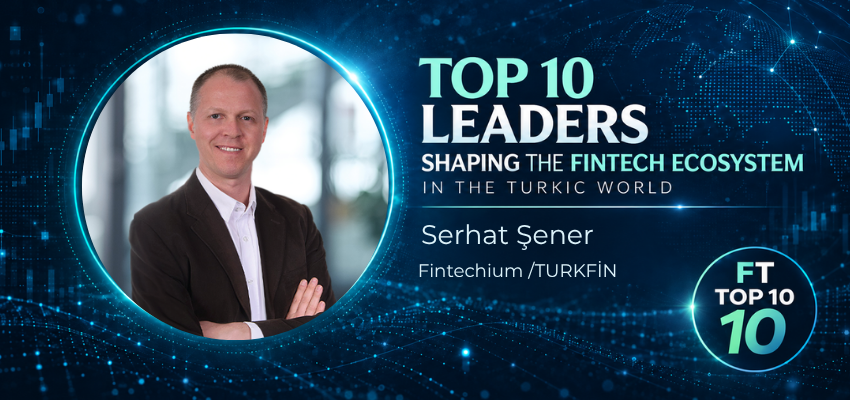
Founder of Fintechium / Board Member of TÜRKFİN
With many years of experience in Türkiye’s payment and electronic money sector, Serhat Şener has in recent years emerged as one of the figures bringing this expertise into fintech cooperation initiatives among Turkic states.
Having played an active role in the institutional development of Türkiye’s payments ecosystem, Şener today participates in the regional agenda on payment connectivity and financial integration among Turkic states as a Board Member of TÜRKFİN.
In 2026, during regional payments industry meetings held in Kazakhstan, Şener highlighted, on behalf of TÜRKFİN, the importance of connecting the payment ecosystems of different countries and supporting regional economic integration through financial technologies.
Şener’s contribution is shaped by the transfer of the institutional knowledge and experience built within Türkiye’s payment and electronic money sector to the fintech ecosystems of Azerbaijan, Kazakhstan, Uzbekistan and Kyrgyzstan, and by its integration into joint cooperation mechanisms.
Tuğra Musayeva
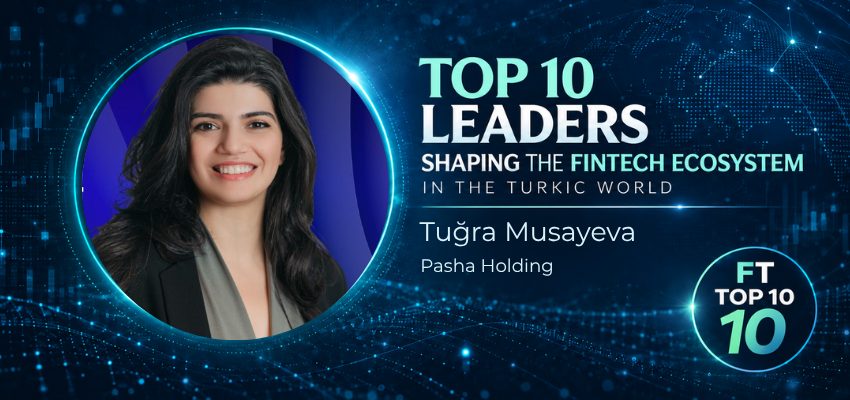
Innovation Leader at PASHA Holding
For a regional fintech ecosystem to develop, it is not enough for companies and investors to grow within their domestic markets. New connection points are also needed where startups, capital and corporate innovation teams can engage with one another regularly across different countries.
Tuğra Musayeva, Innovation Leader at PASHA Holding, has recently stood out through her work to strengthen the ties between Azerbaijan’s innovation ecosystem and Türkiye, Uzbekistan and Kazakhstan.
In the regional innovation initiatives led by Musayeva, Istanbul and Tashkent became new connection points for the Baku-based ecosystem, bringing fintech companies, startups, investment funds, corporates and technology leaders into the same network. In Uzbekistan, the cross-border scaling of fintech companies, access to capital and cooperation between ecosystems across different Turkic states were placed directly on the agenda.
This regional approach also extended to Kazakhstan. In 2026, following initiatives in Tashkent, Musayeva expanded her links with founders and investors in the region through direct engagement with Almaty’s technology and startup ecosystem.
Musayeva’s contribution to the fintech ecosystem of the Turkic world is reflected not in a single company or product, but in efforts to create a regional ecosystem network through which fintech, investment and innovation actors in Azerbaijan, Türkiye, Uzbekistan and Kazakhstan can build more regular and lasting relationships.
Zhanar Samayeva
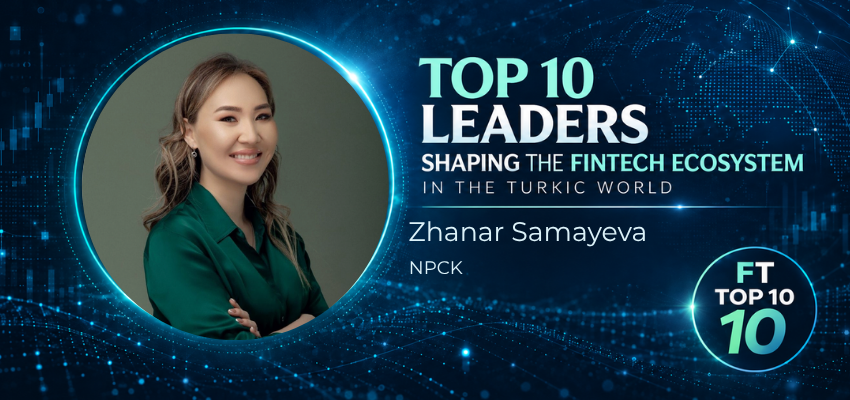
CEO at the National Payment Corporation of Kazakhstan
The most advanced stage of financial integration among Turkic states is reached when national payment infrastructures begin to work directly with one another.
The recent work of Zhanar Samayeva, Ceo at the the National Payment Corporation of Kazakhstan, provides one of the most tangible examples of this process in the region.
In 2025, an agreement between the National Payment Corporation of Kazakhstan and Uzbekistan’s UZINFOCOM launched work on developing shared infrastructure for cross-border digital identity verification in financial services for citizens of both countries. The objective is to establish a secure and mutually recognisable digital identity structure for accessing financial services between Kazakhstan and Uzbekistan.
In 2026, this cooperation was extended to payment infrastructure. Under an agreement between the National Payment Corporation of Kazakhstan and Uzbekistan’s national payment system HUMO, technical work began to enable mutual acceptance of the two countries’ national QR systems and allow users to make cross-border money transfers through their existing mobile banking applications.
Samayeva’s approach is not simply aimed at developing a new money transfer product, but at making the national financial infrastructures of the two countries compatible with one another.
Zhanar Samayeva’s contribution to the fintech ecosystem of the Turkic world is most clearly reflected in efforts to connect cross-border financial services between Kazakhstan and Uzbekistan at the level of actual infrastructure, from digital identity to QR payments.
Editorial Framework of the List
This study has been prepared within the framework of the FT Finansal Teknoloji Top 10 Principles and Evaluation Criteria.
In accordance with the FT Top 10 principles, this list does not constitute an award, certification or official ranking. No hierarchical ranking has been applied, and the names are presented in alphabetical order.
The leaders included in the list were selected not solely on the basis of their current positions or institutional titles, but through a combined assessment of their contributions during the 2025–2026 period across the following areas: cross-border contribution to the fintech ecosystem of the Turkic world, connections between ecosystems, contributions to the development of payment and financial infrastructure, investment and innovation networks, institutional cooperation and regional impact.
The contributions of leaders operating in different roles are not directly comparable on a single scale. The impact of a central bank executive on payment infrastructure and interoperability, the ecosystem connections created by a fintech association leader, the contribution of an investment ecosystem executive to access to capital, and the cross-border operational impact of a technology company executive each represent different archetypes.
For this reason, the study does not seek to identify the “best” leaders through a single performance metric. Instead, it aims to make visible those actors who are contributing in different ways to the current development of the fintech ecosystem across the Turkic world.
The exclusion of any individual from the list does not constitute a negative assessment, nor does the selection claim to represent the entirety of the fintech ecosystem across the Turkic world. The assessments are based on publicly available and verifiable sources as of the date the text was prepared.
Sesli Dinle
Editör Ekibi
FT Finansal Teknoloji editör ekibi, fintech ve dijital finans alanındaki gelişmeleri haber değeri ve editoryal perspektifle takip eder.