
Building a Fintech Bridge Between Japan and the Turkic World: Regulation, AI and New Areas of Cooperation
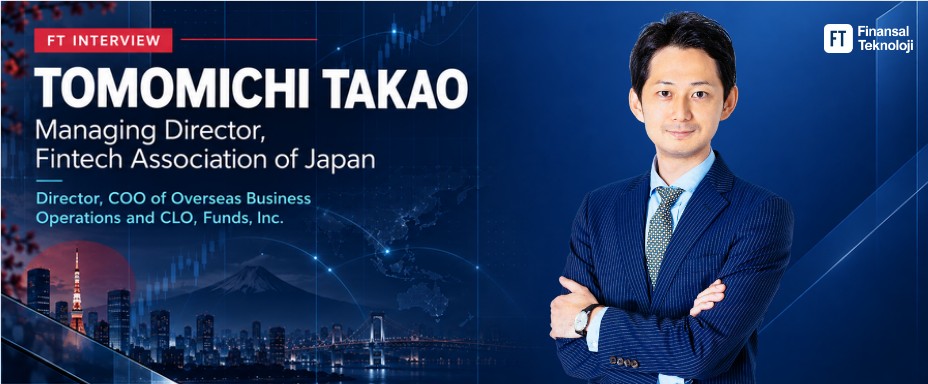
In an interview with FT Finansal Teknoloji, Tomomichi Takao, Managing Director of the Fintech Association of Japan, discusses Japan’s evolving agenda across crypto assets, artificial intelligence, startup financing and open innovation with major banks. Takao also highlights lending, cross-border remittances and regulatory dialogue as tangible areas of cooperation between Japan and the Turkic world.
From your association’s perspective, what is the most important transformation currently taking place in Japan’s fintech ecosystem, and what is driving it?
Cryptocurrencies will be reclassified from payment services regulations to securities regulations (under the Financial Instruments and Exchange Act) sometime in 2027. This is due to the authorities redefining the legal classification of cryptocurrencies. Furthermore, while this is not unique to Japan, AI is permeating society at an astonishing pace, and the use of AI to improve operational efficiency, as well as the rise of AI-powered services, are no exception in Japan (as a side note, it will be interesting to see what impact AI will have on the Japanese labor market, which traditionally places a strong emphasis on worker protection and favors a stable environment). Furthermore, while not limited to fintech, “venture debt” (which, in the narrow sense, refers to loans with stock options) is attracting attention as a new financing method within the startup ecosystem, and numerous examples are emerging. A major factor behind this trend is that, from 2022 to 2023, the Japanese government under the Kishida administration encouraged the use of venture debt as part of efforts to strengthen the supply of capital to startups.
Where does Japan’s fintech ecosystem have a genuine competitive advantage today, and in which areas does it still need to move faster?
In Japan’s fintech ecosystem, while there is a balance with regulations, I believe the crypto sector, including cryptocurrencies and stablecoins, is competitive in terms of both its technological foundation and service design. However, in Japan, partly due to the characteristics of the labor market mentioned earlier, there is a tendency to favor more moderate innovation over so-called “disruptive innovation,” and the key question is whether the sector can fully realize its potential, including from a regulatory perspective. Another strength, which stands in contrast to this, is the presence of globally competitive megabank groups in Japan, led by Mitsubishi UFJ (MUFG), SMBC, and Mizuho. Open innovation with these banks is a strength of Japan’s fintech ecosystem. Recently, BaaS has been gaining traction in the retail sector; given that Japan’s market of 120 million people is relatively large for a developed nation, the implementation of fintech in this retail sector holds significant potential.
How does the Fintech Association of Japan identify the most important needs of its members and translate them into a common industry agenda?
We regularly collect and publish feedback from our members regarding financial regulatory reforms and submit it to the relevant authorities. We have traditionally maintained good relations with regulatory authorities, and we participate in several government committees, serving as a bridge between regulators, financial institutions, and fintech companies.
Japan Fintech Week is co-hosted by the Fintech Association of Japan and Japan’s Financial Services Agency. Where has cooperation between the fintech industry and public authorities produced the clearest results in Japan, and what made those cases work?
In Japan, there are several hurdles, based on laws, regulations, and established practices, that government agencies face when organizing events. Our role is to fill the gap when the government, as a private-sector player, finds it difficult to take the lead. Additionally, JFW has been hosting roundtable discussions through the Asia Fintech Alliance, of which we are a member; we view this as one of the achievements resulting from global collaboration among fintech organizations.
Looking in both directions, where do you see the strongest opportunities for Japanese fintech companies expanding internationally, and for international fintech companies entering the Japanese market?
When considering overseas expansion, P2P lending (including cases where the borrower is a corporation) is viewed as one of the most promising sectors within the Japanese fintech industry, given the environment for raising capital. As for overseas fintech companies entering the Japanese market, many of these players specialize in payments and remittances; while competition exists in this area, it can still be considered a promising sector. The asset management sector may be an area where a global track record tends to be an advantage. At the very least, regulatory authorities have established a practical framework that allows investment management licenses to be obtained in English. Furthermore, in response to labor shortages, Japan is accepting foreign nationals as labor immigrants, albeit on a limited basis. On the other hand, since financial inclusion for these foreign nationals is a potential challenge, businesses targeting labor immigrants as customers may have a competitive edge.
In your experience, what separates an international partnership that produces measurable results from one that remains largely symbolic?
The most important thing, of course, is that there are clear benefits for both sides, isn’t it? If each side’s market appears promising to the other, it’s easier to move forward with the partnership. Beyond that, I believe the level of enthusiasm shown by the people in charge is, naturally, also important.
Türkiye, Azerbaijan, Kazakhstan, Uzbekistan and Kyrgyzstan are developing increasingly connected fintech ecosystems. Where do you see the most realistic opportunities for cooperation between Japan and this region, and what could be an effective first step?
While this reflects the personal opinion of the respondent rather than that of the Fintech Association, I believe lending is one of the most promising sectors. In terms of infrastructure, cross-border remittances and hedging solutions may still have room for improvement. As a first step, it would be ideal to implement measures that foster a better understanding of each other’s regulatory environments and opportunities.
By 2030, what should fintech associations have built together that no single country can build effectively on its own?
Since finance is, by its very nature, a cross-border activity, we believe that collaboration with players in other countries is essential for fintech organizations as well. The Asia Fintech Alliance has already been established, primarily in East and Southeast Asia. I believe we are seeing a similar trend in the Turkic-speaking countries, and I believe we should continue to expand these partnerships.
Sesli Dinle
Editör Ekibi
FT Finansal Teknoloji editör ekibi, fintech ve dijital finans alanındaki gelişmeleri haber değeri ve editoryal perspektifle takip eder.